

Click on a project to learn more
Personal 'DIY' EEG and BCI Passion Project
Behavioral Coupling of EEG and Positive Operant Conditioning Task
EEG Waveform Lettering GUI
Multitaper Spectrogram Implementation in EEG Analysis
Help yourself and enjoy your stay! ☕
Don't spill it!

About Me
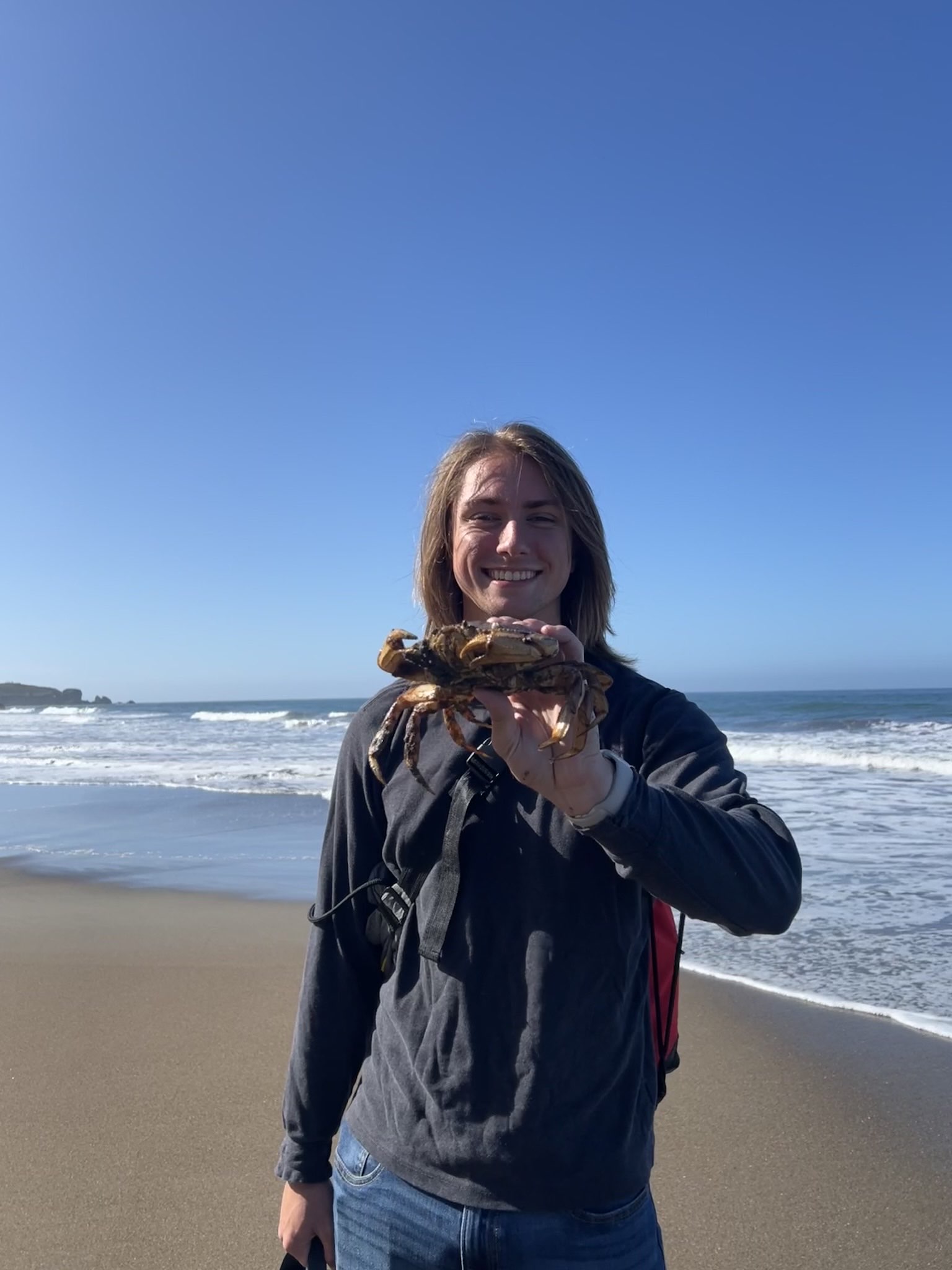
Welcome! I'm Sean, a junior specialist in neuroscience and biotech enthusiast with a passion for understanding the brain and identfying behavior-associated biomarkers in EEG.
After acquiring my Associates degree in Natural Science at 18 in high school, I continued my education at UC Davis where I earned my B.S. at 20 years of age in Neurobiology, Physiology, and Behavior. Now, at Dr. Jill Silverman's lab at UC Davis Health, my work investigates mouse models of neurodevelopmental disorders and characterizes electrophysioligcal trends in EEG with respect to measurable behavior metrics. I'm heavily involved in experimental design, behavioral experiments, craniotomy and brain surgery procedures, in vivo/in vitro neurophysiology classification, data processing, and manuscript preparation, though I'm mostly known by my lab coworkers as the "computer wizard guy".
I'm also working on a personal project where I'm self-collecting my own personal EEG dataset from an RC circuit EEG device I built from scratch for the purposes of developing a DIY brain-computer interface.
Outside of work, it's easiest to find me at the mountains hiking/rock climbing, or at the beach surfing/fortifying my sand castle. Unless I'm tired, in which case I'm usually at my computer.
Read more about my various projects in the projects section!


Projects
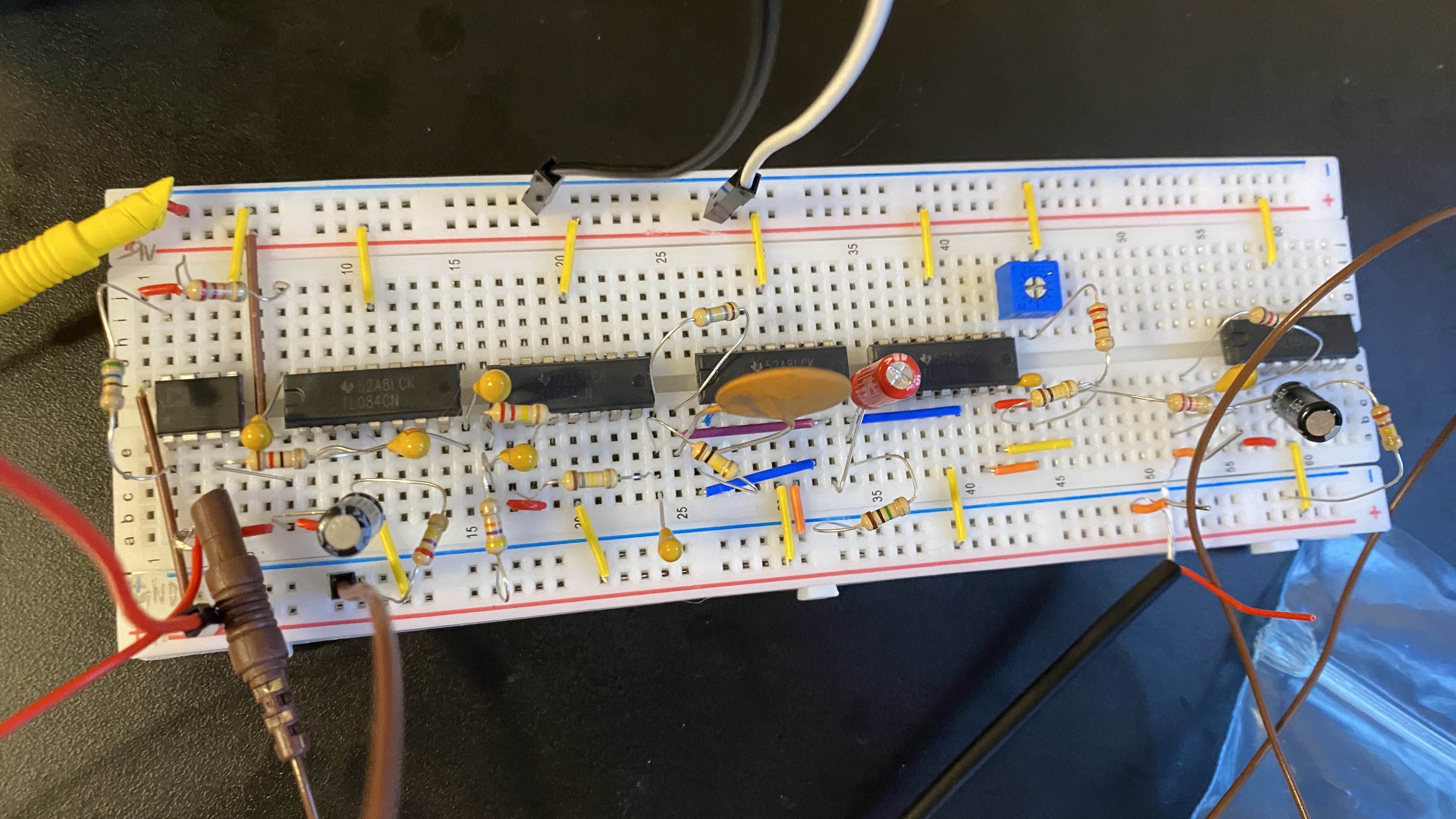
Personal 'DIY' EEG and BCI Passion Project
All about my personal homemade EEG and BCI device! I built and troubleshooted an analogue wet-electrode wearable EEG prototype to enable myself to begin collecting my own data sets from training sessions. Currently, I'm in the late stages of validating analogue signal acquisition and optimizing signal to noise ratio while beginning data set collection.
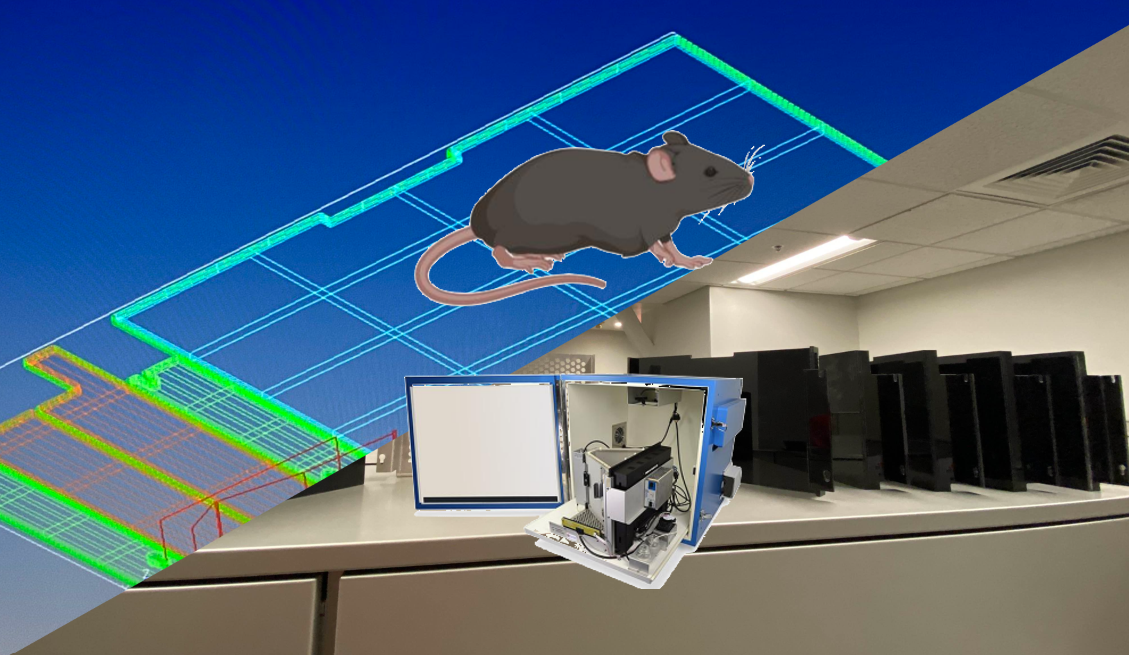
Behavioral Coupling of EEG and Positive Operant Conditioning Task
All about a Silverman lab work project overcoming historical hurdles for implementing wireless EEG behavioral assays in a touchscreen learning task. Includes information spanning from my prototyping and production of a non-shielding behavioral enclosure, identification of ideal wiring layouts for cross-system interaction, and directions for near-future experimental plans.
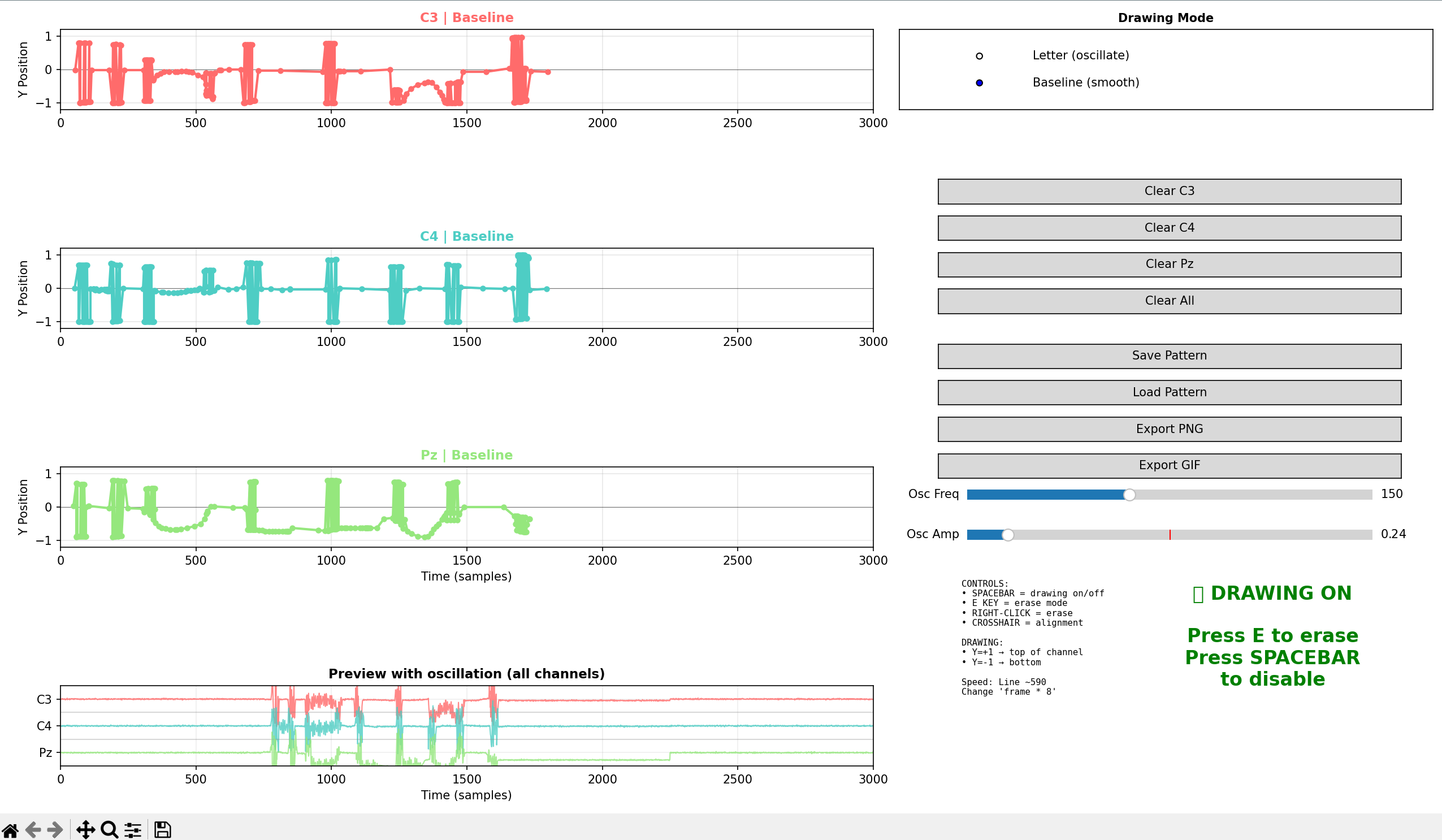
EEG Waveform Lettering GUI
A fun side project that was used to make all the section headers on each page! The current approach has 3 rows/"channels" to mock-imitate an EEG channel layout. A semi-optimal approach I found was to divide letters into a 3 row system and manually draw the respective channel's letter "contributions" to give the illusion of lettering.
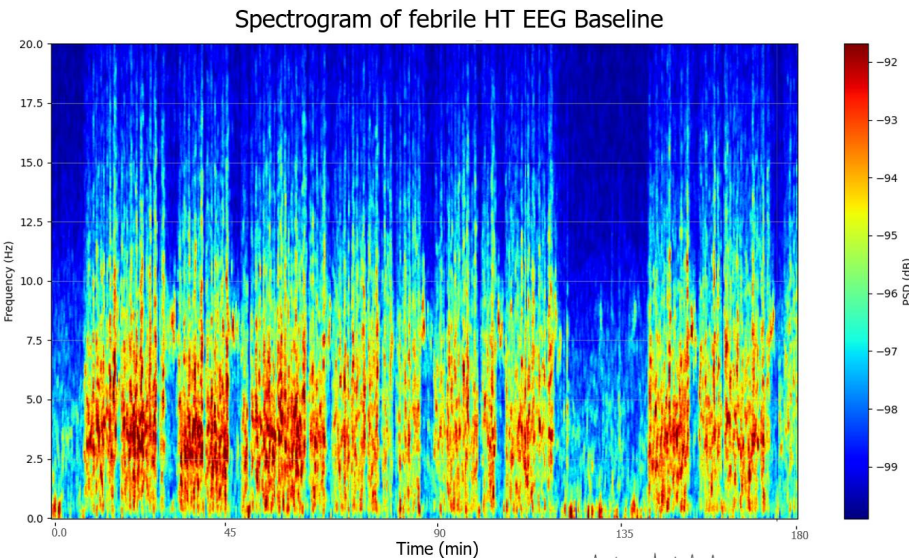
Multitaper Spectrogram Implementation in EEG Analysis
Developed a user friendly, memory efficient pipeline for analyzing our 3 day EEG recordings in mouse models using spectral analysis. Implemented a chunking feature to process recordings because my system kept crashing when I tried loading our longer EEG recordings via a wrapper for Prerau lab's multitaper spectrogram python script. I also enabled batch processing capabilities because manually analyzing files is never fun.

Publications
The following publications list were drafting by my PI, Dr. Jill Silverman, and I regarding the various projects I've been involved in during my time working at the lab! Many are currently in their mid to late stages of completion, though we envision publications within the next year.
Translational Outcomes in a Novel Variant Mouse Model G288S of KCNT1-Related Epilepsy.
BioRxiv https://doi.org/10.1101/2025.07.22.666003
Aberrant in vivo neurophysiological outcomes and in vitro electrophysiological neuronal indices in preclinical models of KCNT1-Related Epilepsy.
Electrophysiological Biomarkers during Positive Operant Behavioral Assessment in preclinical models of KCNT1-Related Epilepsy.
Leveraging Sensory Evoked Potentials as a Translational Biomarker in Preclinical Genetic Models of Neurodevelopmental Disorders.
Loss of CDKL5 produces hyperexcitable neurophysiological signatures, dysfunctional quality and quantity of sleep and aberrant imagining by magnetic resonance.
Neurophysiological biomarkers of aberrant gait dimensions: Leveraging time synchronous cortical EEG and function dimensions to cortical inform platform provide translational biomarkers in genetic neurodevelopmental disorders.
A novel model of Ube3a overexpression provides interstitial and isodicentric preclinical models of Dup15q Syndrome by disease relevant behavior and neurophysiological phenotypes: An essential tool for Dup15q Syndrome Therapeutic Development.
Multitaper Spectrogram Implementation
Developed a user friendly, memory efficient pipeline for analyzing our 3 day EEG recordings in mouse models using spectral analysis. Implemented a chunking feature to process recordings because my system kept crashing when I tried loading our longer EEG recordings via a wrapper for Prerau lab's multitaper spectrogram python script. I also enabled batch processing capabilities because manually analyzing files is never fun.
Background & Motivation
Long-duration EEG recordings from telemetry-implanted mice are important for tracking baseline spiking dynamics and sleep-stage classification in the Silverman Lab. I implemented a wrapper for the Prerau lab's multitaper implementation (prerau.bwh.harvard.edu), but I ran into difficulties processing larger 72 hour recordings due to memory constraints on my system, limiting analysis to shorter EEG recordings we collected in other behavioral experiments. It was still handy for visualizing epileptic progression in our seizure prone lines, but much of the Prerau's lab highlighted use case was in human sleep assessment, so I wanted to be able to at least also replicate the functional capabilities in our longer recordings we perform.
Approach & Methods
The bulk of the analysis work still lies in the Prerau lab's multitaper spectrogram engine, though I made three key changes in the "pipeline":
- Chunked processing bins: Instead of trying to preload the entire file, I opted to load 1 hour segments using lazy file loading which I would then "stitch" back together. So far, this implementation has worked, evident by the drastic reduction in crashes my computer experieces while I analyze files (100% -> 0%!)
- Power normalization feature: I also added a relative power conversion (calculated as a percentage of total power) alongside Prerau's absolute power, something I hope to use later down the line for standardizing a cross-subject comparison of total spectral power. I should note though that a limitation with this approach is that higher frequencies tend to wash out a lot as they tend to have lower power contributions than the lower frequencies in the same animal.
- Batch processing and customizable parameters via a GUI: A big goal was to make the platform usable by all the members of our lab. So, I allowed easy user input for the various mutlitaper parameters Prerau and co. highlight in their paper. I also added simple file discovery and error logging.
Results & Findings
The new pipeline successfully processes multi-day recordings that previously gave my computer a headache, primarily via aggressive garbage collection after chunks were finished with analysis to maintain manageable memory usage. The results seem pretty promising, as Prerau's higher resolution spectrograms reveal frequency dynamics during sleep stage events that are hard to notice in traditional EEG waveform. I'm currently working on rediving into literature to find any other documented trends in mouse EEG for easy sleep stage identification and any other behaviors I can pair with EEG.


To Do
Fix scaling of selected second generated EDF channel.
Add AEP/fVEP ERP analysis scripts as additional tabs at the top of the GUI
Allow for Event Related Spectral Perturbation figure generation for the evoked potentials experiments.
Homemade EEG and BCI Personal Project
I am currently in the early-mid stages of a passion project where I'm building a real-time brain-computer interface to detect motor imagery (imagined muscle clenching) from self-recorded EEG data on myself to translate my EEG signals into keyboard commands in real time.
Background & Motivation
Hobbyist BCI toolkits can be costly, especially for someone with my current budget limitations, hindering my accessibility for personal education and experimentation within BCI developmnt. I opted instead to build my own EEG recording RC device for it's lower entry of cost and educational opportunity to hone circuit theory fundamentals. The ultimate goal was to utilize this as a recording data acquisition platform to allow me to conduct self-experimentation regarding functional motor imagery detection tasks, akin to the sensory evoked potentials experiments we conduct in the Silverman Lab.
Technical Implementation
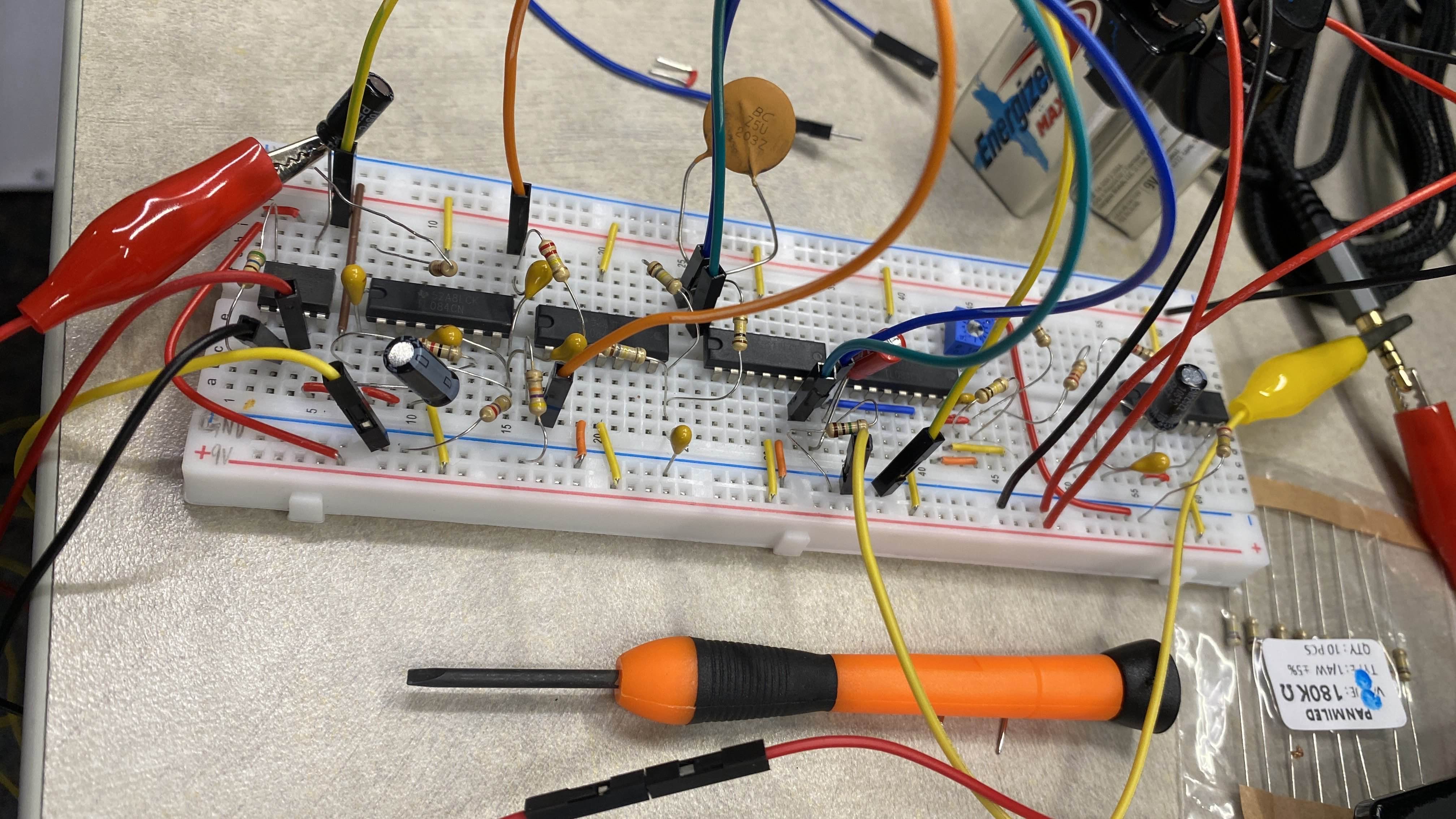
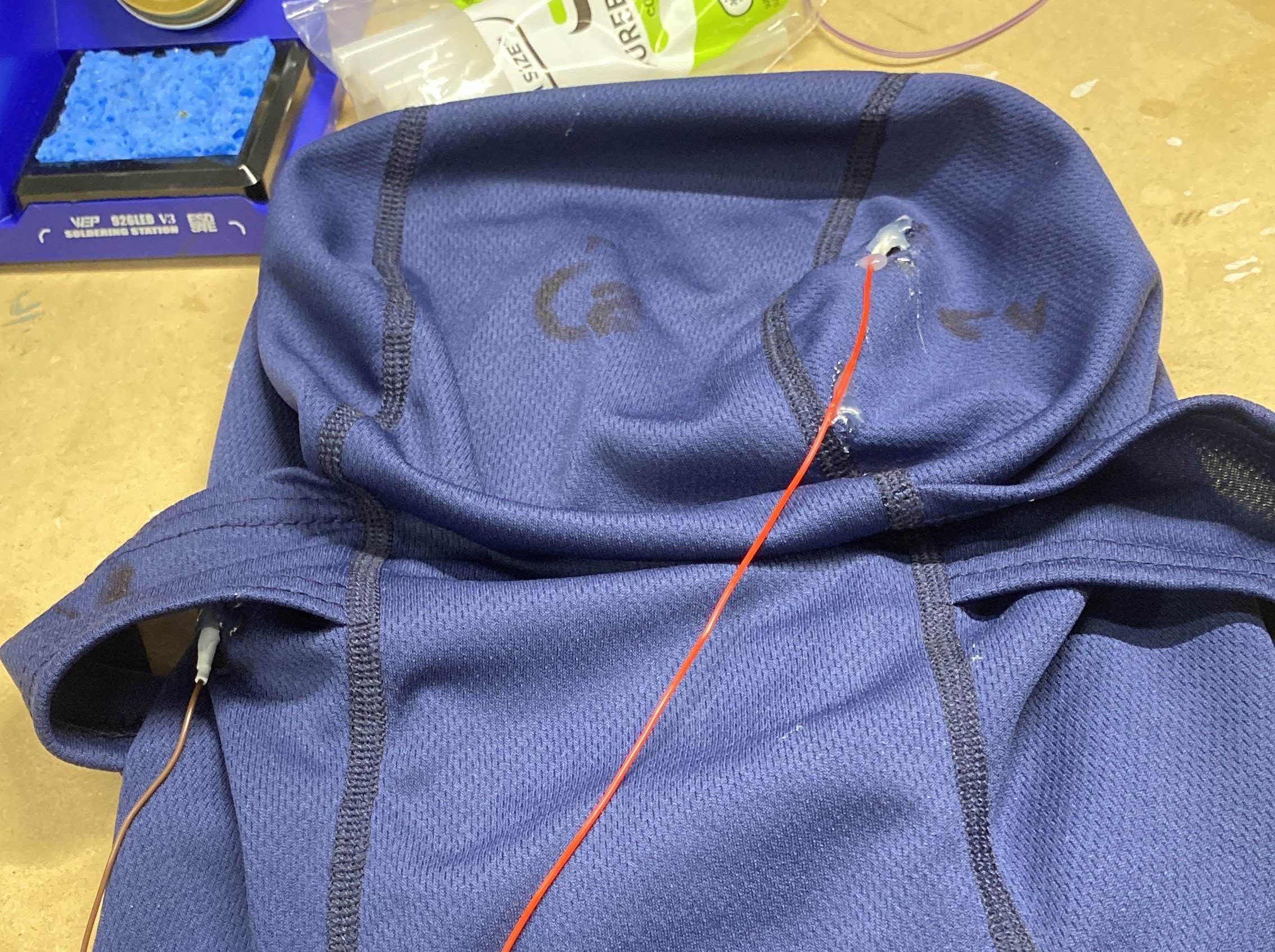
I utilized the medical grade instrumentation amplifier AD620 where I take in the two inputs from 2 electrodes and compute the difference between them, amplified by a controllable gain multiplier dependent on the resistence between pins 1 and 8. The next 6 main stages are comrpised of the 60Hz notch filter (to reduce electrical noise), a 7Hz high pass filter, a 31Hz low pass filter, a 1Hz high pass filter, a necessary gain stage to improve signal to noise ratio, and one last 60Hz notch filter via operational amplifiers (TL0884CN). Since capacitors are capable of storing a charge (the degree of which is dependent on it's specifications), wiring either end of the capacitor in the same circuit allows for interesting oscilitory activity of the signal, which, when the correct parameters are selected, allows you to selectively wash out specific frequencies of interest. From there, in order to standardize electrode placement during the experiment, I built my own 1 recording channel EEG cap comprised of 2 electrodes (1 mastoid reference, 1 active site) with hot glue, electric tape, and a ski mask to standardize inter-session electrode placemet.
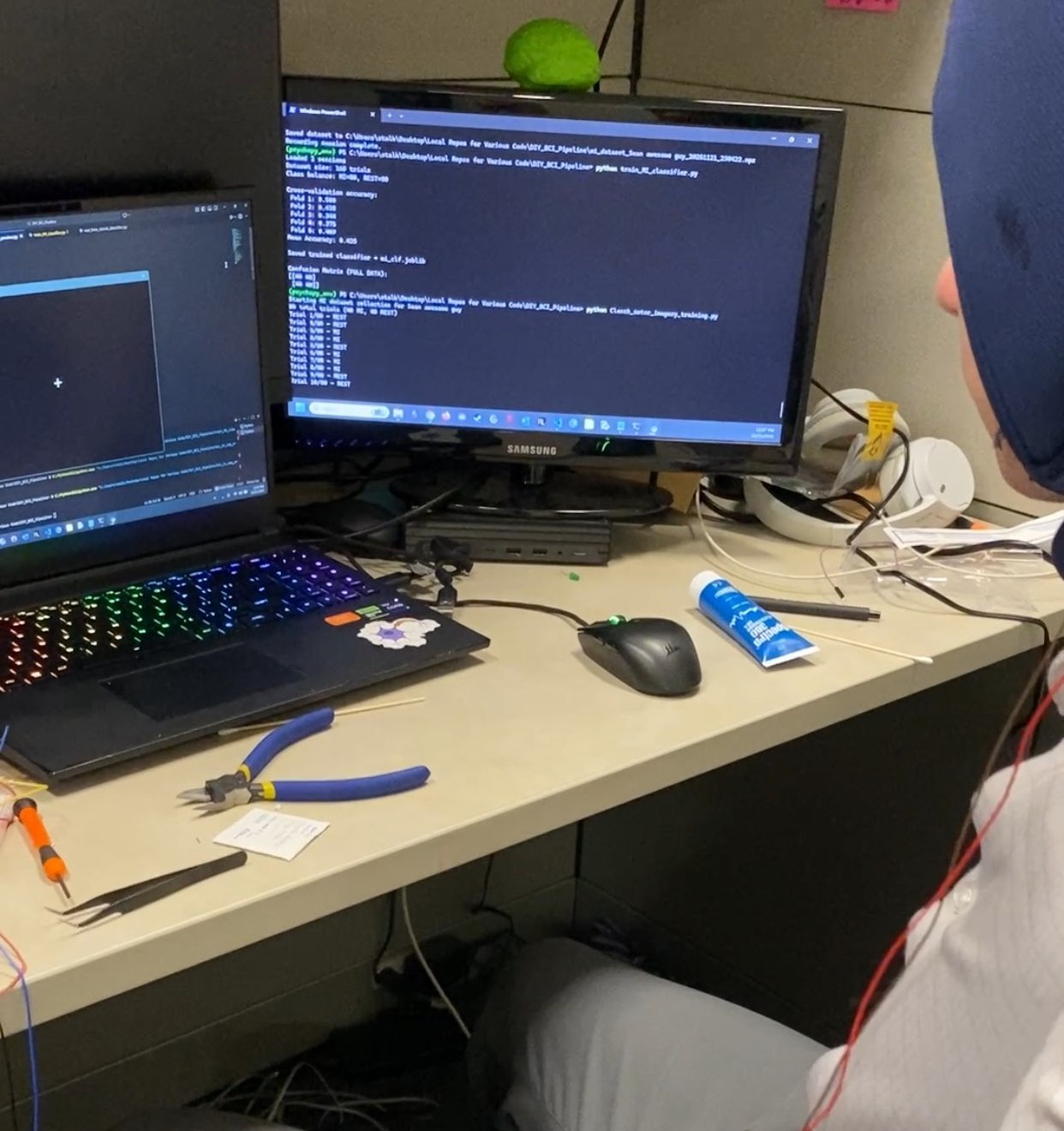
I then developed four simple Python modules to make a complete BCI pipeline, namely a validation real-time visualization (of the activity and time-domain + FFT) using circular buffering of the mic in EEG data to verify circuit quality. I produced my own psychology behavioral task using PsychoPy to present pseudo-randomized visual cues to myself (trials such as "CLENCH" vs "REST") with synchronized 3-second EEG recordings, collecting 80 trials per session with variable inter-trial intervals.
Then, I preprocess my collected data: I downsample from 48 kHz (MIC-IN sampling rate) to 250 Hz, apply a bandpass within 8-30 Hz to further scrub the noise in parallel with the analogue filtering stages, and then feed my dataset to train a Stratified k-fold (k=5) verified logistic regression model from scikit-learn with my tagged datasets. Lastly, it's just a matter of screening my live-data feed from my mic continuously at 1 second EEG windows before triggering my selected keyboard output based on my motor imagery state.
Results & Performance
With some initial success, I've begun ML model training from signal acquisition through real-time signal screening. I was able to successfully validate signal acquisition. Initial verification confusion matrices possessed scores that suggested the logistic regression model was able to adequately identify true pos./neg. cases more often than erroneous false pos./neg. cases (F1 = .512), though larger datasets and/or an increase in recording electrodes from relevant sites would undoubtably improve classification capabilities.
As such, the live-decoder successfully outputs my designated test keyboard input "a", which I observed in most cases when I imagined my left fist clenching, though given the models current prediction ratio in a controlled experimental environment, further attention is needed for improving the brain decoder's robust cross-transfer capabilities aross varied environmental/brain states.
To Do
The current main next-step problems to tackle is undertrained models - resolved as I collect more data sets on myself - and electrode count, which can be addressed once my shipment of additional AD620s arrives. Compacting analogue filtration to individual op. amp. chips would additionally help, accompanied by transfering the set up to through-hole soldering on a protoboard instead of its temporary bread board layout. Further, logistic regression is an acceptable machine learning algorithm for the present validation stages of the project (as I only have binary descrimination between a clench and rest state in MI), though I aim to incorporate SKlearn's support vector machine algorithm instead for its more robust classification capabilities as I continue to scale the project. Lastly, I'm additionally considering adding an adjustable (non-conductive) strap along the same plane that the electrodes are in to ensure the electrodes are good fits to my scalp.
Behavioral Coupling of EEG and Touchscreen Operant Conditioning Task
All about a Silverman lab work project overcoming historical hurdles for implementing wireless EEG behavioral assays in a touchscreen learning task. Here I prototyped and produced a non-shielding behavioral experiment platform, identified ideal wiring layouts for our touchscreen and EEG system interaction, and I'll go over some next-step directions for an upcoming near-future experimental plans.
Overview and Problem Items
In our lab, we utilize Lafayette Instrument's Bussey-Saksida Touch Screen Chambers (or the ABET II touchscreen chambers) for highly customizable positive operant conditioning tasks in our mouse models, though there have been historical difficulties prior to my enrollment in the Silverman lab in successfully integrating our main EEG acquisition platforms in DSI with the third party touch screen system for three primary reasons:
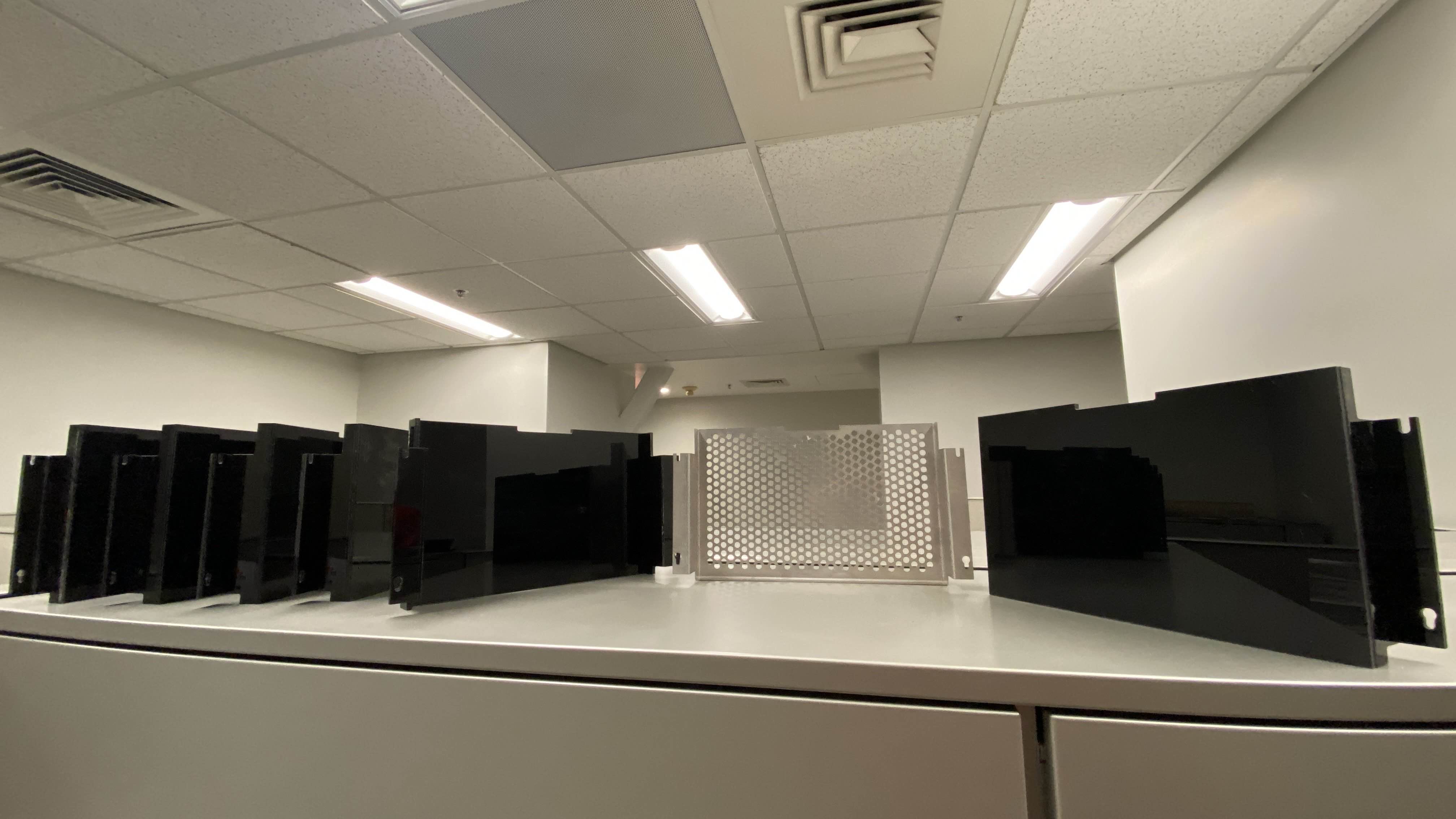
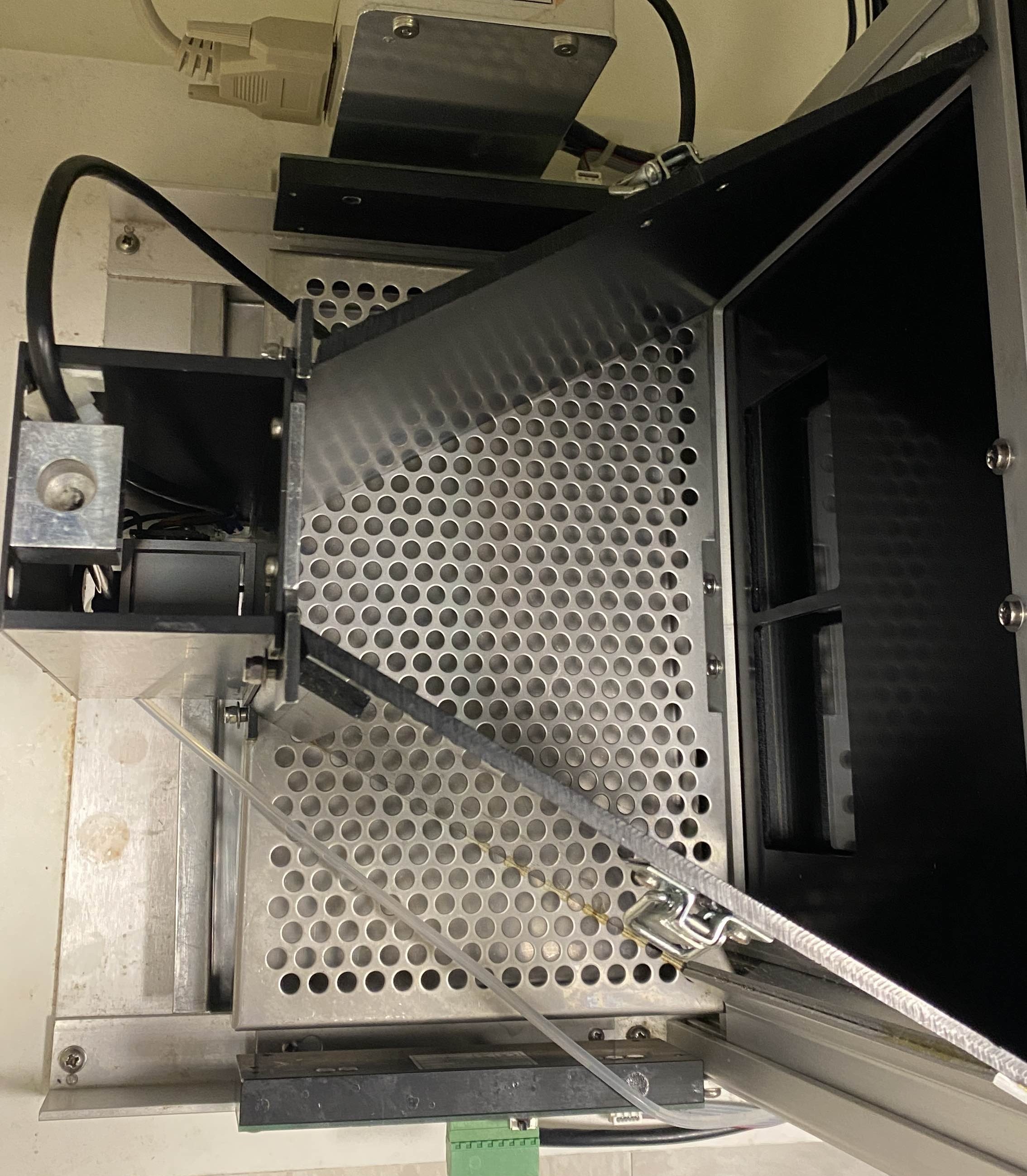
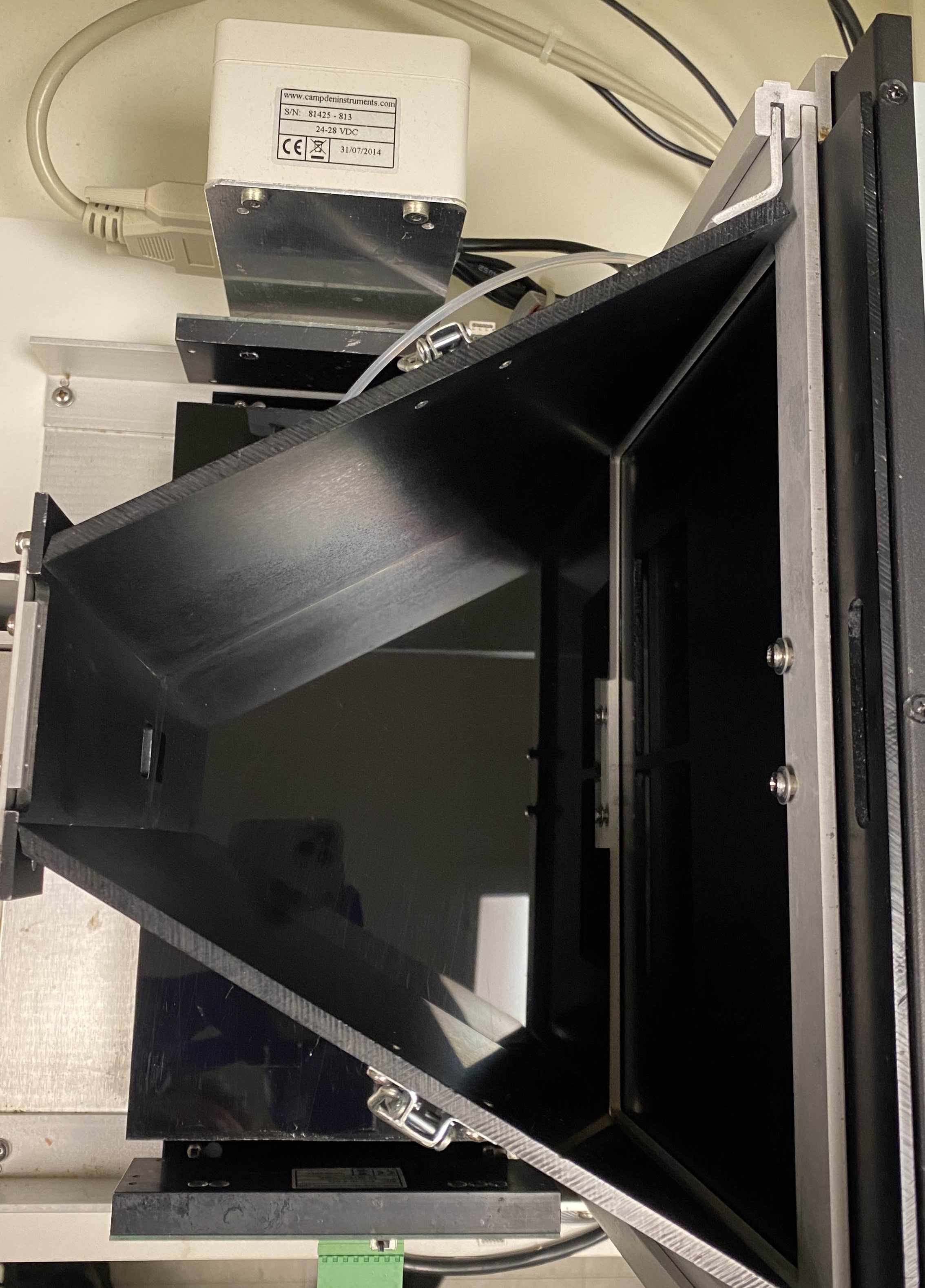
- Shielding Experimental Environment: The ABET II behavioral chambers were machined from metal, serving as large shielding factors that denied signal transmission from our wireless EEG telemer in the mice with the external receiver, washing out the signal entirely.
- Digital IO Setup Conditions: The experimental chambers are highly customizable, though require an additional PCI card to be installed correctly for the Lafayette system to be able to digitally output experiment items of interest in real time.
- Wiring Layout with Correct Grounding: The last hurdle is wiring the digital output lines from the PCI card to the DSI EEG system.
Results and Learnings
I produced effective workarounds to all three problem items:
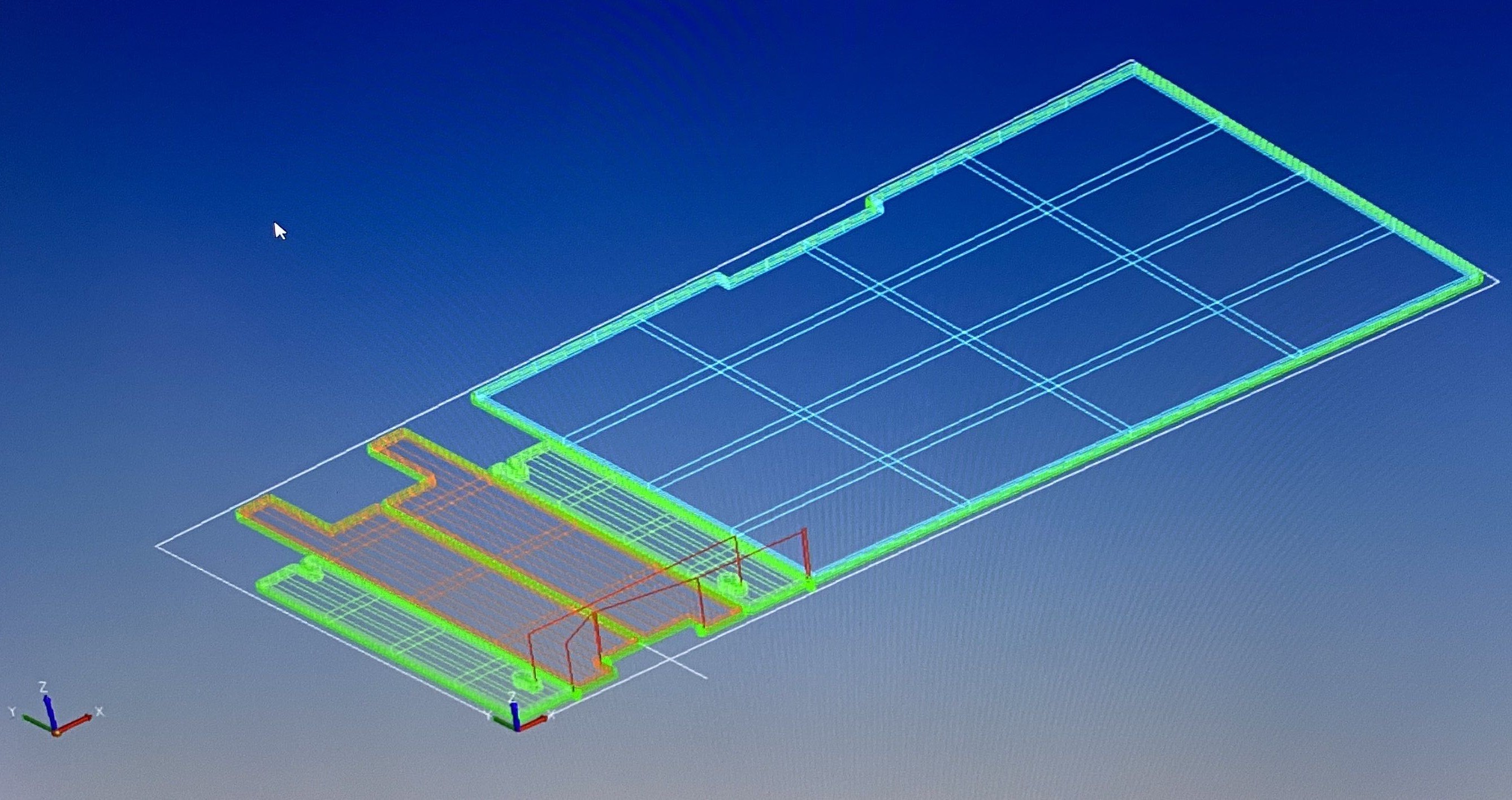
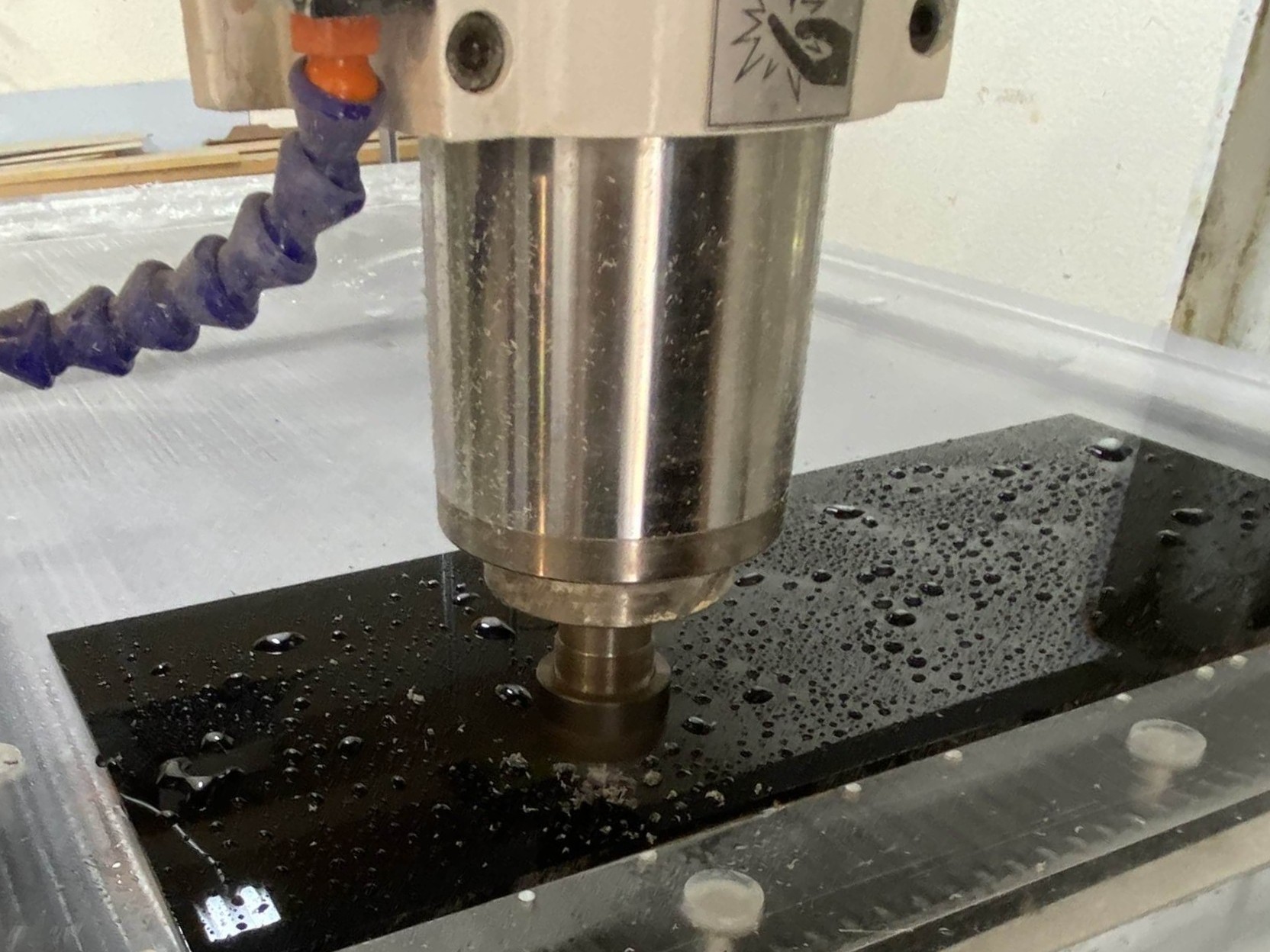
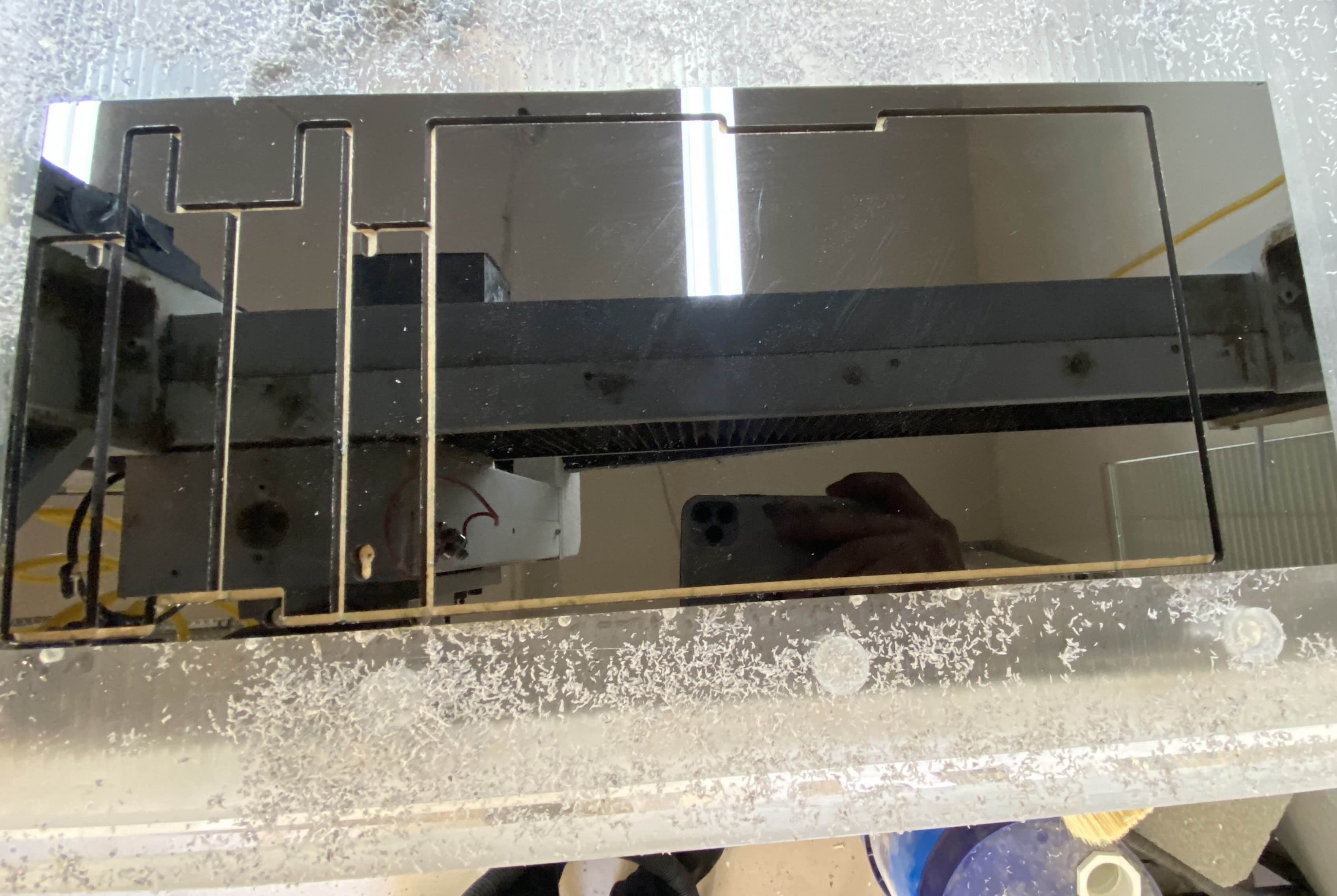
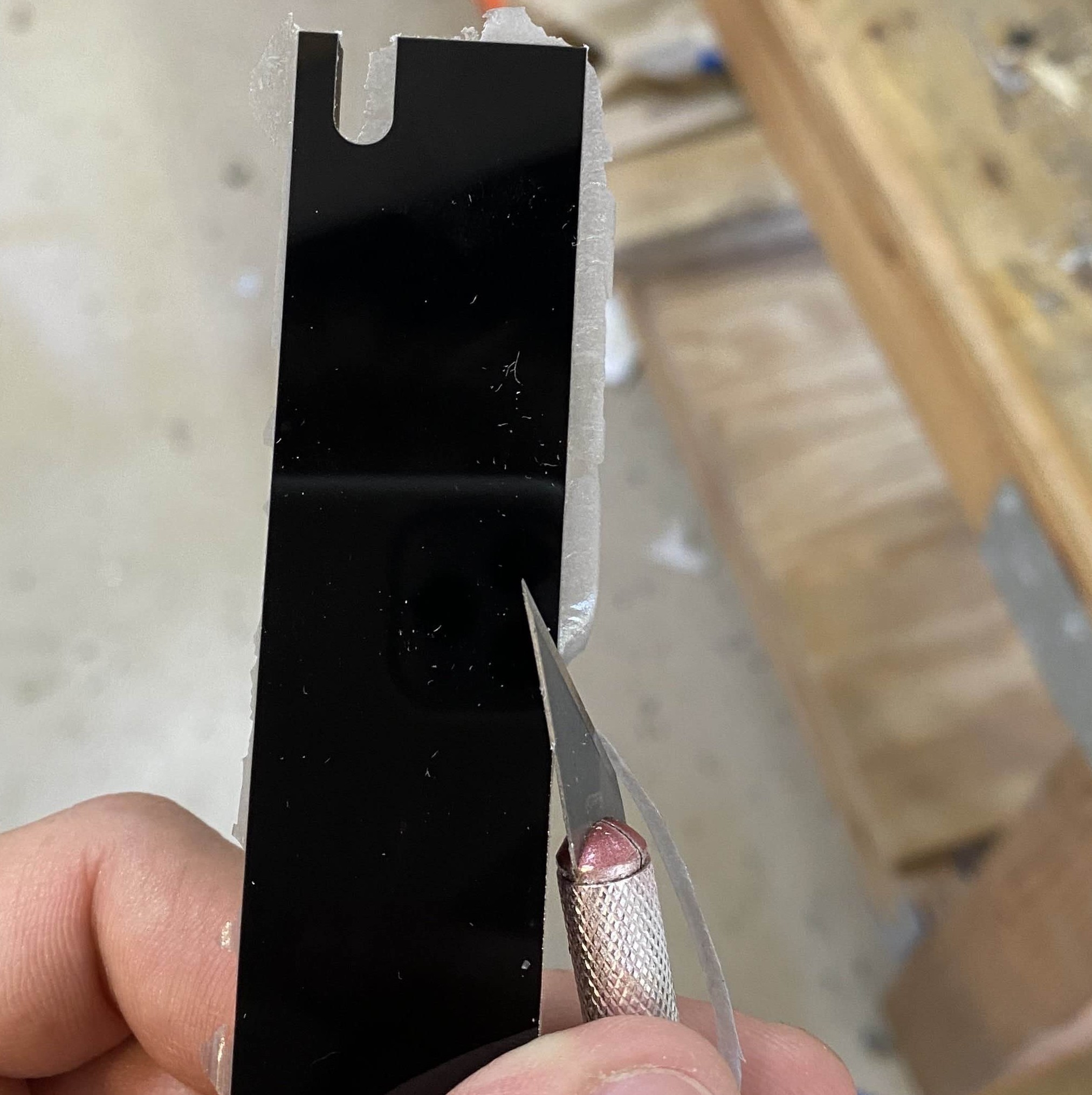
- Shielding Experimental Environment: Replaced metal experiment platforms with acrylic, allowing signal to transfer across the material with low signal impedance. An additional benefit to this is they now match our other behavioral chambers in material, are easy to reproduce, and are more sanitary for inter-experimental cleaning. For this stage, I designed material parts in SolidWorks and seperated into individual parts for CNC machining in .dxf file formats with accomanying gcode for fabrication. Then, I handled CNC machining operations with my father and I's home CNC workshop involving part preperation (deburring, scoring attachment points), and assembled final product with Acrylic Weld On to solvent bond the material. Final parts match factory metal platforms and fit in behavioral chambers with the added benefit of low EEG impedence and easier cleaning!
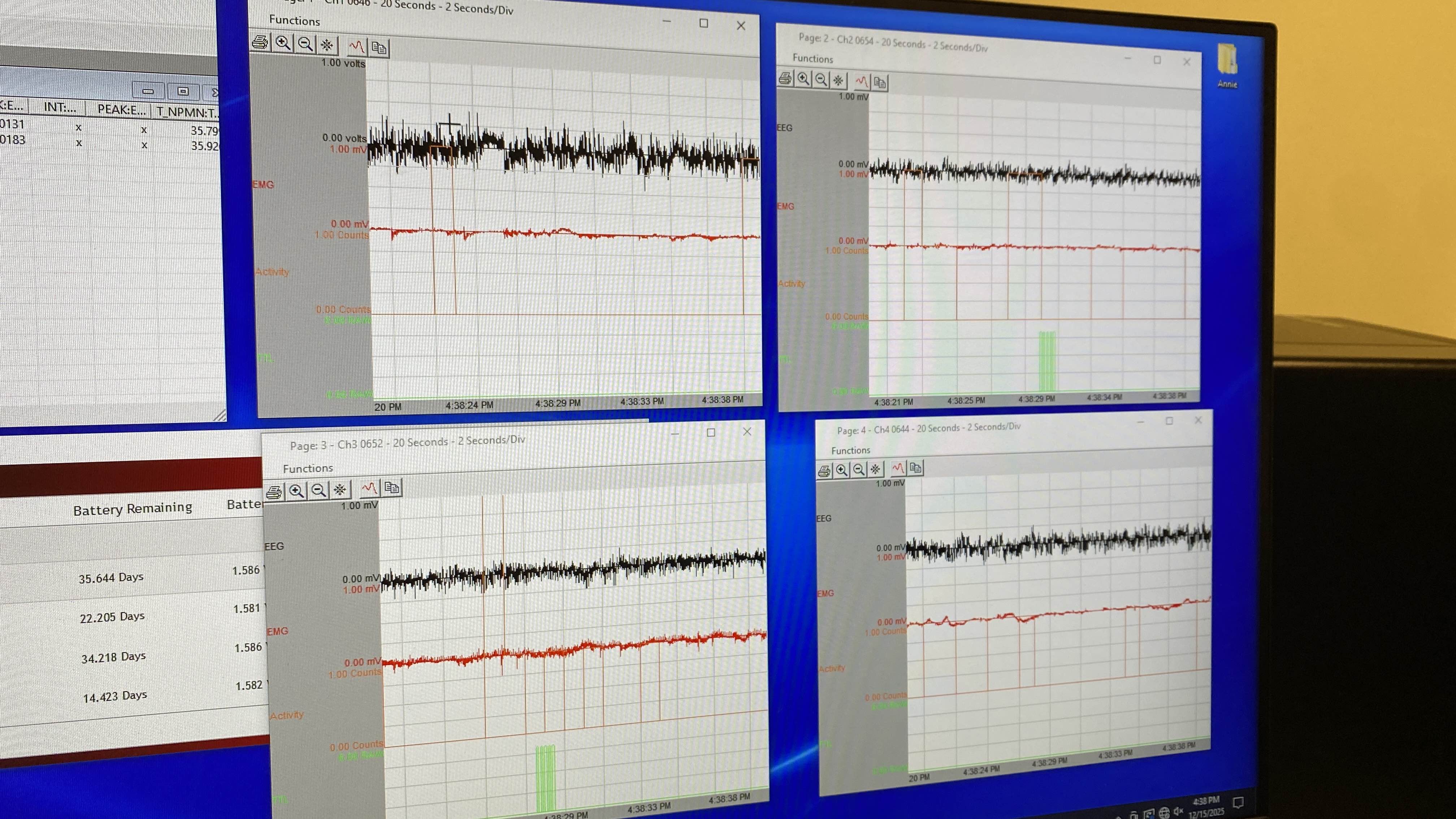
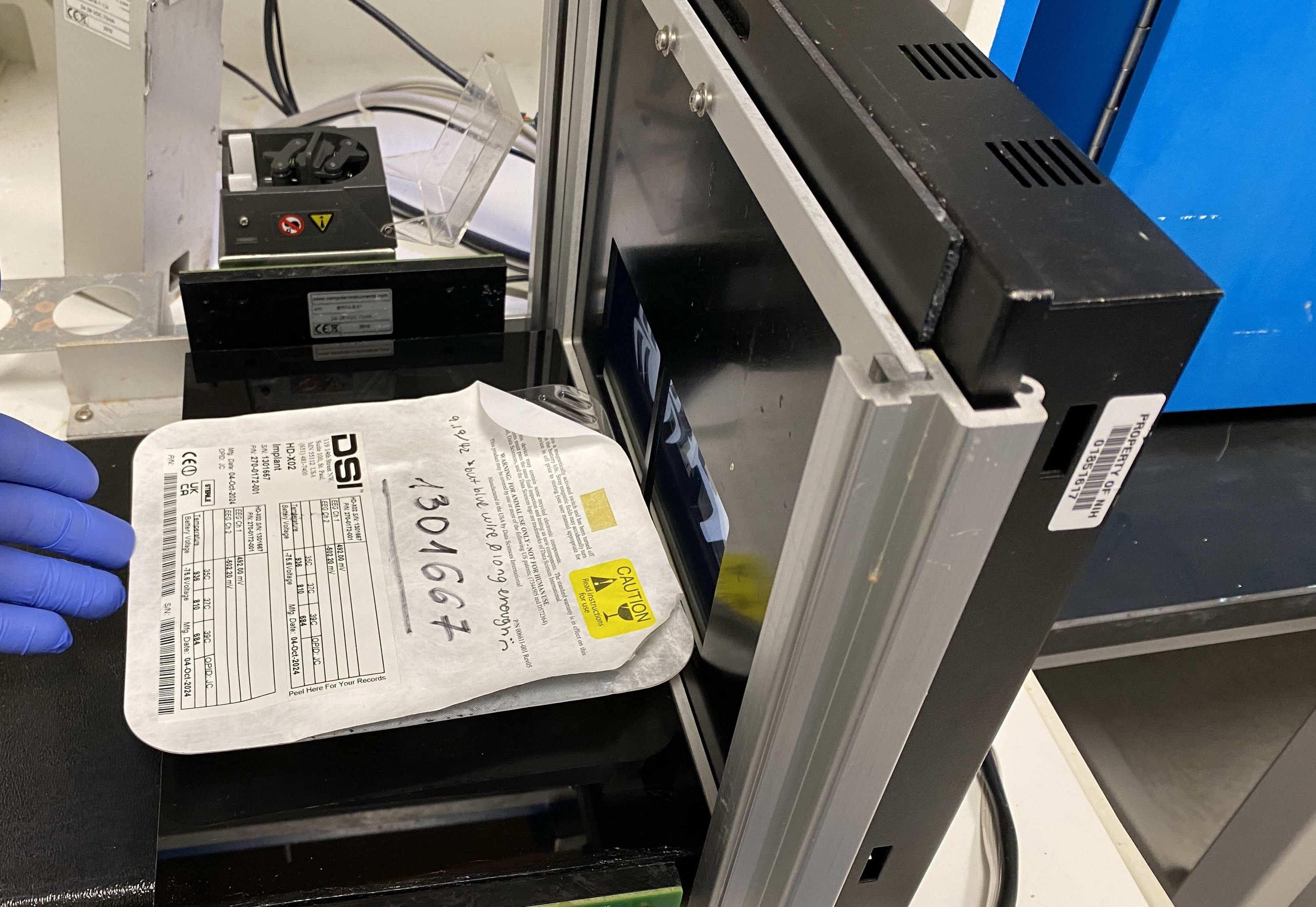
- Digital IO Setup Conditions: The highly customizable Abet II system allowed me to modify our behavioral task to include an additional digital output line depending on the animal's performance in the chamber. To reduce the amount of wired connections (and therefore troubleshooting) between our Touchscreen and EEG systems, I instead chose to have each behavioral measure of interest produce a stereotyped TTL pulse. For example - seen within the green channel in the image below - correct animal trials produced 2 square TTL pulse of 500ms duration, whereas incorrect trials would be identified by 3 shorter pulses. Animal reward collection would produce 5 TTL pulses. The result would be an additional "touchscreen metrics" channel in our EEG system, where EEG signatures could be assessed alongside performance and behavioral metrics, akin to our evoked potentials experiments we perform.
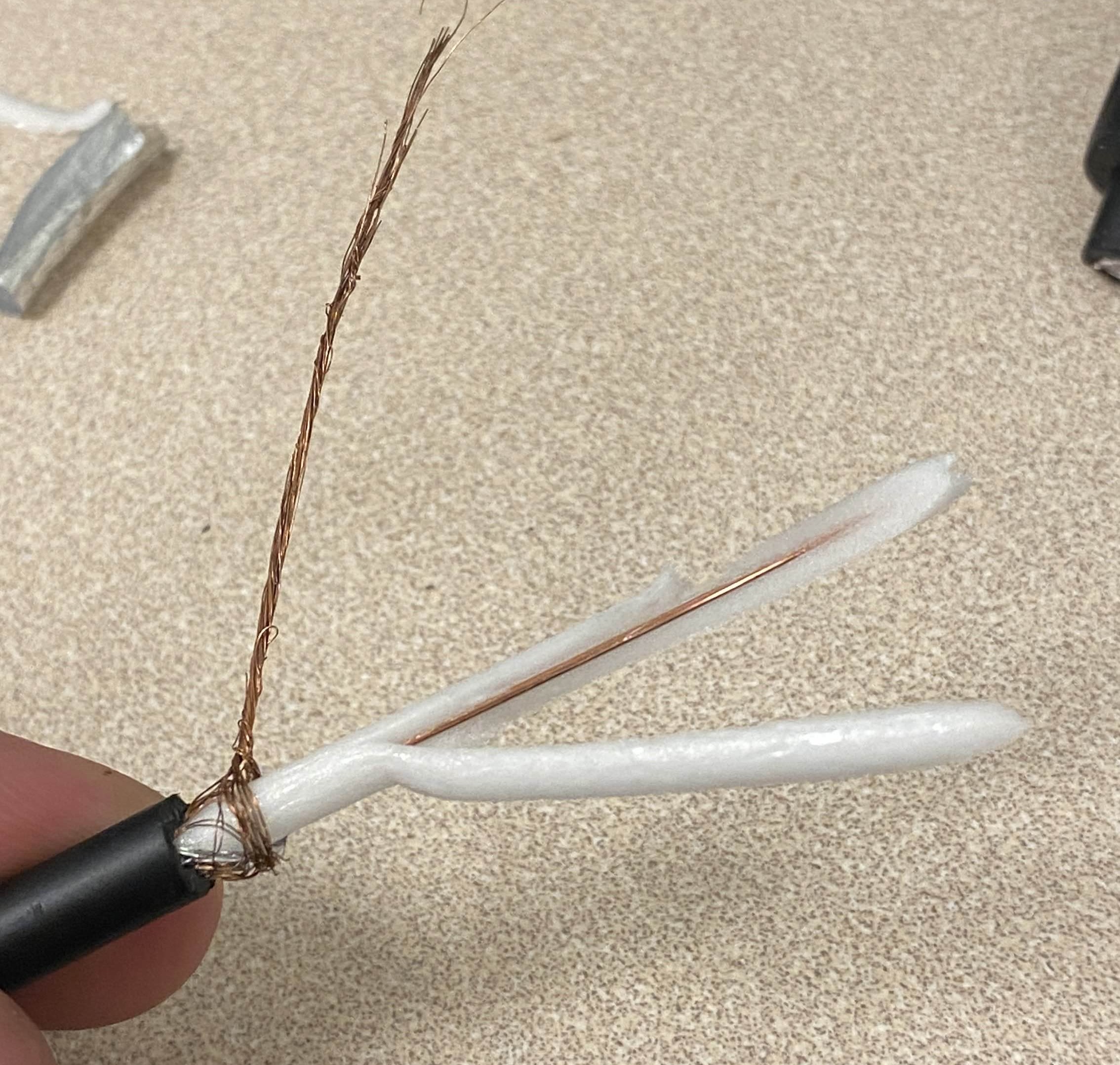
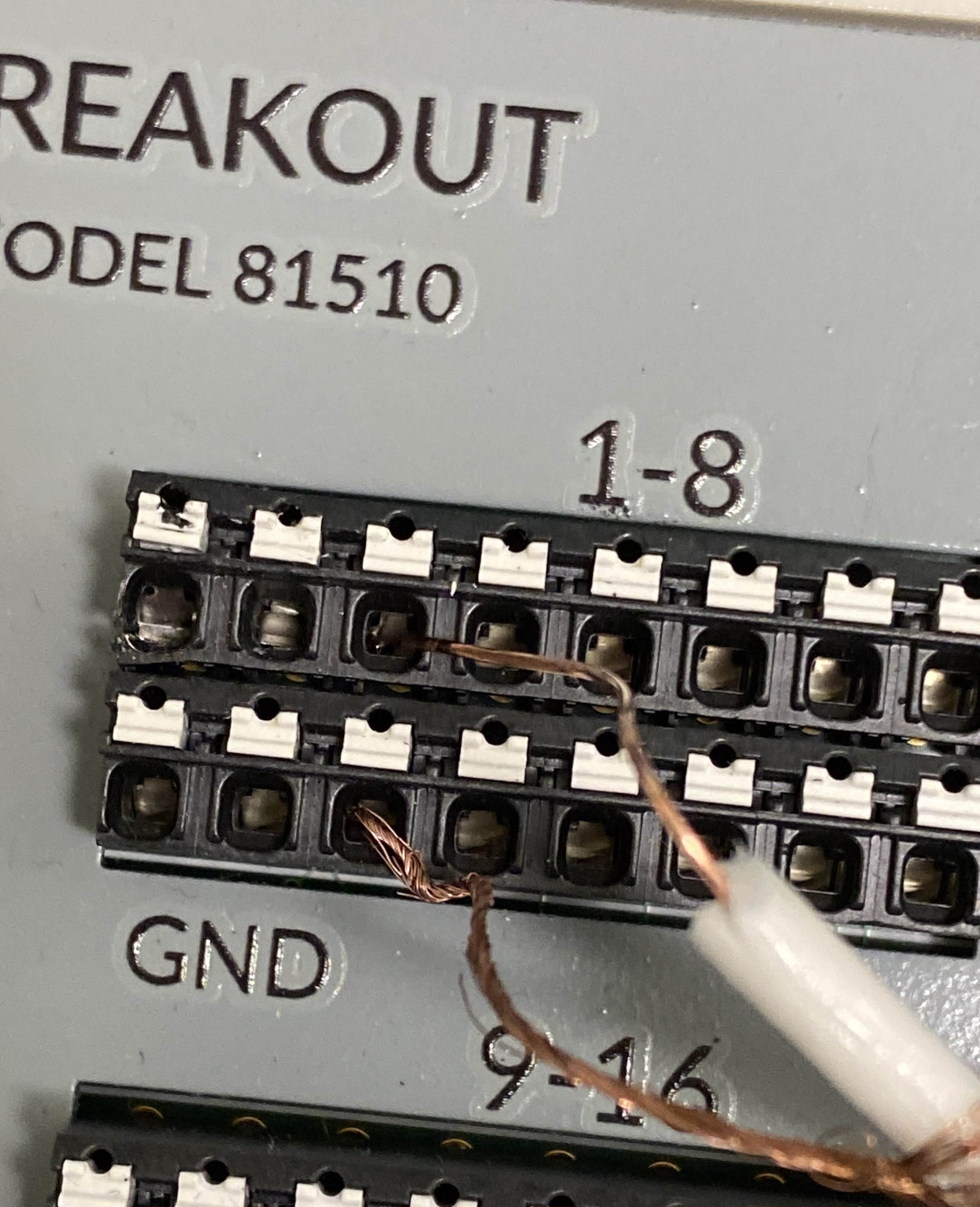
- Wiring Layout with Correct Grounding: The last hurdle was successfully resolved by stripping a BNC coaxial wire to uncover the positive signal wire and grounding wires. Lafayette provides a TTL breakbox connector to our PCI card for digital output lines, though lacks any additional manual or guidance without a rather hefty price tag. Funnily enough, it was my work in my DIY EEG and BCI I've been developing on the side as a passion project that provided the necessary insights for resolving the wiring issue. It was simply a matter of correctly programming the digital output line to go to an individual breakbox channel for a given chamber, and then routing the positive signal and ground wires to that. There, the other BNC end routes into the DSI system painlessly.

Next Steps
We are currently in the early stages of a touchscreen EEG cohort. Just like our evoked potentials metrics, I propose a new behavioral measure called "Behavioral Evoked Potentials", which would identify the event related EEG waveform potential with respect to a behavioral metric of interest (e.g. if the animal gets the trial correct, trial incorrect, collects the strawberry milkshake reward, etc.), allowing us to oberserve the evolution in the waveform trends over time as the animal learns the task. Since this novel experiment would combine important preclinical FDA metrics such as EEG trends, ERPs, and cognitive metric tasks, we believe this study will serve to establish an important translational baseline for future EEG studies and cognitive assays.
EEG Waveform Lettering GUI
A fun side project and tool that I made to make all the section headers on each page! The current approach works by sectioning a word into 3 rows/"channels" to mock-imitate an EEG channel layout. Initially, I was considering automating the generated output based on a user text input, and then using an edge detection algorithm such as OpenCV to segment letters to identify when each respective channel would need to "contribute" erratic wave activity to produce the illusion of a complete letter, but I was on a time-crunch with my other projects and work, so I opted instead a workaround that let me manually draw the respective channel's letter "contributions" and then stitch all the channels together in a final output.
How It Works
The tool presents three independent drawing canvases representing mock EEG channels. I added options for toggling drawing mode with hotkeys to go between a "baseline" EEG recording and "activity" based EEG signaling. The tool makes the waveform from sinusoidal oscillations with adjustable frequencies and amplitudes. It's a silly workaround, but the trick is really trying to strategically place the high-amplitude oscillations in each channel at the right horizontal positions so that when all three are vertically stacked, the combined waveforms visually spell out letters. To help with this, I added a crosshair that shows across all three channels to help align them. For example, to draw an "M", the top and bottom channels contribute the outer peaks while the middle channel fills the central "V" shapped valley.
Technical Implementation
Built entirely with Matplotlib's interactive widgets and mouse event callbacks (button_press_event, motion_notify_event) to capture freehand drawing. Points are stored as coordinate tuples with a boolean flag indicating letter and baseline modes. I also added a point interpolation engine to help smooth my bad mouse handwriting input into continuous paths.
The preview panel aggregates all three channels in real-time, offsetting each by 1 unit vertically to allow the different channels to stich together as seemlessly as I could. I impleented export functions to make PNGs and animated GIFs using Matplotlib's PillowWriter module.
Design Challenges & Workarounds
The original vision involved OpenCV edge detection to automatically decompose letters into channel contributions, though time constraints derailed this, but manual drawing proved way more effective once muscle memory developed for common letter patterns.
There is also a save/load system using JSON to preserve design sessions that stores all points and oscillation parameters for later adjustment.
Future Improvements
The automated edge detection in OpenCV approach remains appealing for a future version, so I might revisit this at a later point, as I feel the letter waveforms are a novel graphical element I hadn't seen elsewhere.
Project Title 5
Detailed overview of project 5. Replace with the actual content.
Section 1
Add your content here.
Section 2
Add more details about the project.
Section 3
Continue describing work and findings.